
Hook Arm Garbage Truck Working Principle and Technical Overview

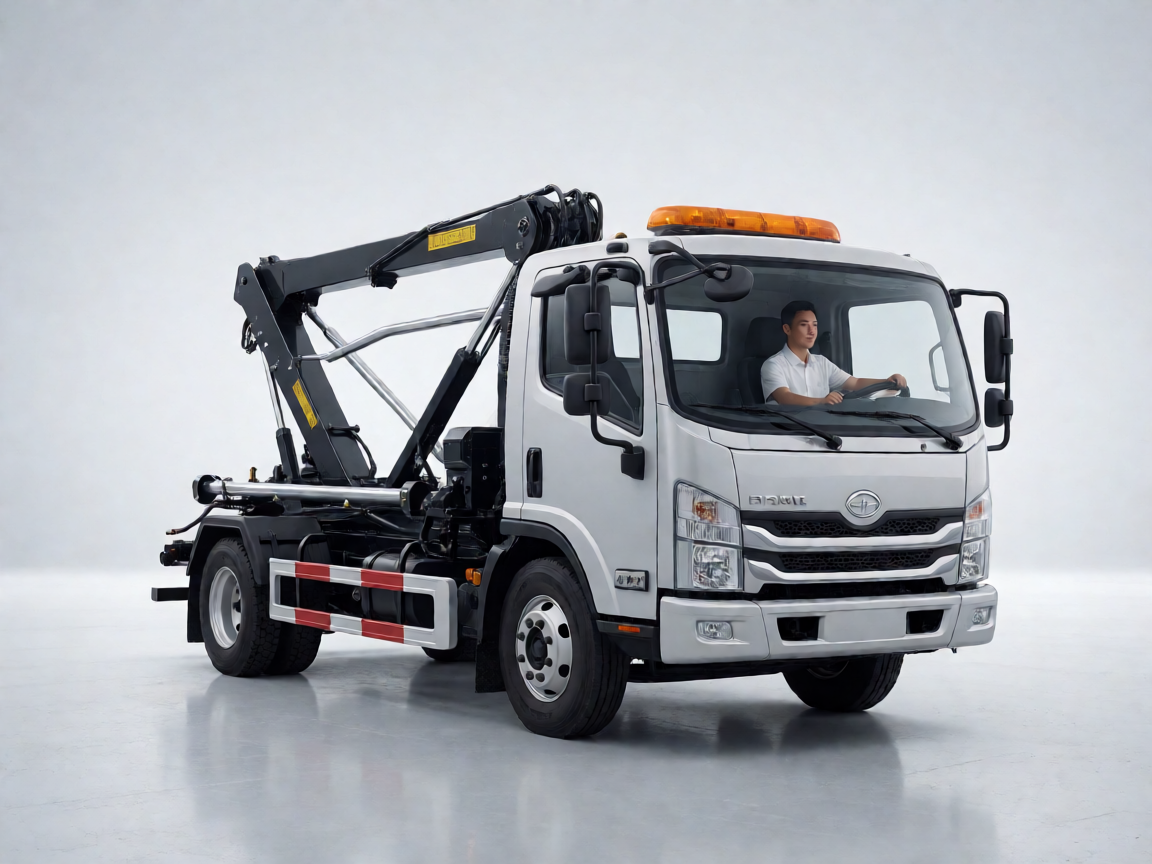
hook arm garbage truck working principle Safety Overview
The hook arm garbage truck working principle relies on a hydraulic lift-and-dump cycle that connects a detachable steel waste body to a rear-mounted arm mechanism. Municipal fleets and private waste collectors depend on this system because it allows rapid swapping of containers at collection points. The hook arm system eliminates the need for drivers to manually handle heavy bins, which reduces labor costs and improves operational safety across daily routes.
Hook Arm Garbage Truck Working Principle
The core concept behind this vehicle centers on a single articulated arm that hooks beneath the rear frame of the waste container and pulls it onto the truck chassis. Operators lower the arm using a hydraulic cylinder, slide the hook over the container’s rear lifting lugs, and then retract the arm to lift the loaded body into a horizontal position. Meanwhile, additional tilt cylinders on the chassis pivot the container toward the front, compressing the waste and enabling discharge through a rear hopper or slide-gate door.
This mechanical sequence appears straightforward, yet every component must operate under substantial hydraulic pressure. The hook arm itself carries dynamic loads that can exceed fifty tonnes during lifting operations. Engineers therefore design the arm from high-tensile steel plate and reinforce the pivot mounting points on the chassis frame. As a result, the system maintains structural integrity over thousands of lifting cycles without significant wear.
The hydraulic circuit that drives the entire process consists of a gear pump mounted on the truck PTO shaft, a directional control valve, and multiple double-acting cylinders. Fleet managers should note that the PTO draws power directly from the engine transmission, which means the diesel engine must idle at a regulated speed during loading and unloading.operators therefore monitor RPM gauges closely to prevent stalling or excessive fuel consumption.
Hydraulic System Configuration
The hydraulic pump delivers pressurized fluid through reinforced hoses to three primary actuators: the main lift cylinder, the tilt cylinder, and the hook engagement cylinder. The lift cylinder extends to pull the container onto the bed, while the tilt cylinder rotates the entire body assembly upward for unloading. The hook cylinder operates independently, controlling the pivot arm that engages and releases the container lugs.
In addition to these main circuits, the system includes a hydraulic tank with a filler cap, oil level sight gauge, and a return line filter that captures particulate contamination. Maintenance teams should inspect the hydraulic fluid every five hundred operating hours and replace the filter elements according to the manufacturer schedule. Dirty fluid accelerates seal degradation inside the cylinders and can cause premature valve failure.
Most modern hook arm trucks also incorporate an electro-hydraulic proportional control system. Operators manage valve position through a joystick or push-button panel located inside the cab. This electronic interface provides smoother valve actuation compared to manual levers, which reduces shock loading on the hydraulic lines and extends component service life. The proportional system also allows fine adjustment of lift speed, giving operators better control when positioning containers on uneven ground.
Body-to-Truck Engagement Mechanism
The physical connection between the hook arm and the waste container depends on precision-machined lifting lugs welded to the rear underside of the body. These lugs accept the curved hook end of the arm, creating a secure pivot point that transfers all lifting forces directly into the chassis frame. The engagement geometry ensures that the container center of gravity aligns properly over the rear axle during transport.
Operators must verify that the hook fully seats inside each lug before beginning any lift cycle. Incomplete engagement can cause the container to slip free during raising, which creates a serious safety hazard. Most manufacturers equip the system with limit switches that prevent the tilt function from activating until the hook sensors confirm complete closure. This interlock feature provides an additional layer of protection against operator error.
The waste container itself typically holds between eight and twenty cubic meters of refuse, depending on the model selected. Bodies are constructed from abrasion-resistant steel plates in the floor and side panels, while lighter gauge steel may be used for the roof structure. Some fleets specify stainless steel interiors for corrosive waste streams or municipal sewage sludge applications. Meanwhile, standard garbage service bodies feature a wear lining made from Hardox-type material on the loading floor and hopper area to resist impact damage from sharp debris.
Unloading Cycle and Compression Design
Once the container reaches the disposal site, the operator activates the tilt cylinder to rotate the body forward. The container pivots on the hook arm until waste slides out through the rear discharge opening. Some models include a mechanical latch that holds the container in the tilted position during dumping, while others rely on hydraulic pressure to maintain position until the cycle completes.
Certain hook arm garbage trucks integrate a separate compactor blade driven by its own hydraulic circuit. This blade moves back and forth inside the container, packing waste into a denser configuration before transport. Higher density loading means fewer trips to the landfill, which directly reduces fuel costs and route time. Fleet operators managing high-volume collection routes should consider this feature a worthwhile investment.
The discharge rate depends primarily on the tilt angle and the friction characteristics of the waste material. Fine dry refuse slides freely at angles above forty degrees, while wet compacted waste may require additional tilt or manual assistance. For this reason, many units feature a maximum tilt angle of approximately fifty-five to sixty degrees to ensure reliable discharge across diverse waste types.
Maintenance Recommendations
Reliable hook arm garbage truck operation requires disciplined preventive maintenance. The most critical items include daily visual inspection of the arm pivot pins and bushings, weekly lubrication of all grease fittings, and monthly verification of hydraulic hose condition and clamp tightness. Operators should also check the hook engagement surfaces for deformation or excessive wear after each work shift.
Hydraulic fluid analysis provides early warning of internal component deterioration. Teams should collect sample fluid quarterly and send it to a laboratory for particle count and viscosity testing. Rising particle counts often indicate seal wear inside the cylinders or pump degradation, while viscosity changes suggest fluid contamination or thermal breakdown.
Electrical components warrant regular attention as well. Connectors near the rear of the chassis expose to water, road salt, and debris during normal operation. Technicians should clean terminal contacts and apply dielectric grease to prevent corrosion-related failures. A single corroded connector can disable the entire control system and leave the truck stranded at a collection point.
Chassis mounting bolts that secure the hydraulic power unit and tank frame to the truck rails experience cyclic loading with every lift cycle. Maintenance crews should torque-check these fasteners every ten thousand kilometers and replace any bolt showing elongation or thread damage. Loose mounting hardware creates frame flex that eventually leads to cracked welds and misaligned hydraulic components.
Finally, operators should document every service event in a centralized log system. Recording hydraulic fluid changes, filter replacements, and cylinder rebuild dates helps predict upcoming maintenance needs and supports warranty claims when manufacturers require proof of proper care. Fleet managers who maintain detailed service records also gain valuable data for evaluating component reliability across different truck models and operating conditions.
hook arm garbage truck working principle requires proper operation, inspection, and maintenance to reduce safety risks.


